What if learning generative AI began with a familiar task, such as drafting a message or planning a day out, rather than unfamiliar technical terms? For senior beginners, choosing a generative AI course Singapore learners can follow means looking for clear explanations, practical examples and a pace that supports confidence. A well-structured learning path can make those first steps more approachable.
This guide explains what generative AI learning can cover through everyday examples and how to assess a course’s content, format and level. You’ll also find ways to identify hands-on practice, prepare for a first class and use AI thoughtfully by reviewing its responses and protecting sensitive information. The aim isn’t to master every tool at once. It’s to build a sound foundation, understand where AI may help and take a confident first step into learning.
Key Takeaways
- Generative AI courses introduce tools that create text, images and other outputs. You don’t need to learn how to build AI systems to start using them.
- Begin with a personal learning goal, then compare course prerequisites, stated outcomes and opportunities for hands-on practice.
- Choose an in-person or virtual format that suits your concentration and makes it comfortable to ask questions. Look for guided practice, not demonstrations alone.
- Before your first class, set one achievable goal and bring a question about a task you want to understand.
- Use a simple checklist to assess whether a generative ai course singapore fits your goals, confidence level, preferred format and learning priorities.
How Generative AI Courses in Singapore Help Senior Learners
Generative AI creates new content, such as text, images or ideas, in response to a prompt. A prompt is an instruction or question given to an AI tool. For example, you might ask it to draft a polite message, summarise a passage or suggest ideas for an activity. These familiar tasks offer a practical starting point, even if course descriptions use unfamiliar terms.
Learning to use an AI tool is different from studying how to build an AI system. Using a tool involves giving instructions, reviewing responses and deciding what is useful. Building systems can involve technical disciplines such as programming and mathematics. An introductory generative ai course singapore learners consider should make its intended level and focus clear, so beginners can choose an appropriate starting point. Generative artificial intelligence includes different types of generated content and raises questions about responsible use.
A short video offers another introduction to AI learning for seniors:
What beginners learn about generative AI
Many generative tools use large language models, or LLMs, to produce language-based responses. You don’t need to understand their technical design to begin using them. A beginner course can explain the basic idea in plain terms: a model generates a response based on language patterns and the instructions it receives.
A response may be useful, incomplete or inaccurate. Learners build confidence by practising how to give clearer instructions, review the result and correct it when needed. The goal is informed judgement, not effortless results or automatic trust.
Everyday examples that make AI concepts easier to grasp
Imagine asking an AI tool to organise a weekly activity plan. You could write: “Suggest a simple weekly plan with time for a short walk, errands and reading. Present it as a flexible list, not a fixed schedule.” Treat the response as a draft, not a commitment. You decide whether the suggestions suit your routine.
An AI tool can also rephrase a message. Enter a draft and request a warmer or clearer version, then compare the result with your original. Check that the meaning and details remain accurate before using it. This simple process shows how prompts shape outputs and why you remain responsible for the final decision.
Structured AI education can take learners from foundational concepts towards practical use. Trainetics Academy’s Artificial Intelligence Course is a place to begin exploring AI learning. Consider how the course information aligns with your goals and what you want to learn.
How to assess whether a generative AI course suits your needs
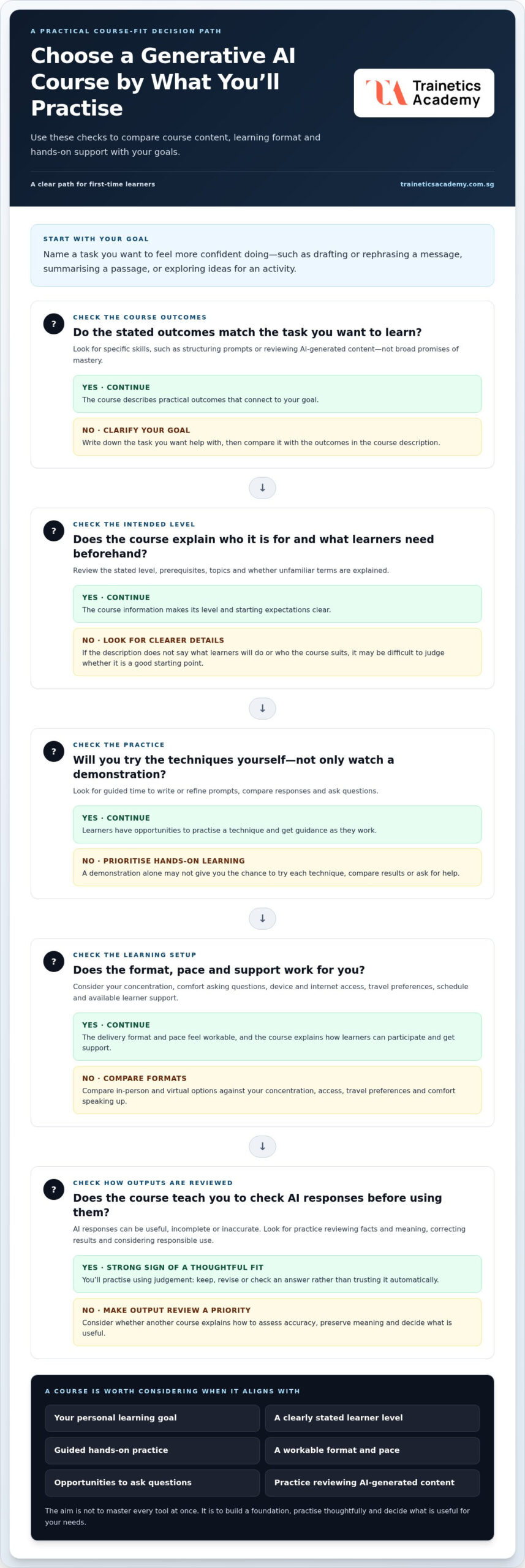
Start with a task you want to feel more confident doing. Perhaps you want to understand AI without feeling overwhelmed, save time on routine writing or explore ways to use it at work. A clear goal helps you judge whether a course’s stated learning outcomes match your needs. It also keeps your attention on practical skills instead of technical terms that may not be relevant.
When comparing a generative ai course singapore learners might take, read the course description for its intended level, prerequisites, topics and practice activities. Look for specific outcomes, such as structuring prompts or reviewing AI-generated content, rather than broad promises of mastery. If a description doesn’t explain what learners will do, it can be hard to tell whether the course suits a first-time learner or someone seeking more advanced applications.
Questions to ask before choosing an AI course
Check whether the course welcomes beginners and explains unfamiliar language as it arises. See which tools learners will practise with and whether access is needed before or during class. The course information should also explain the teaching format, pace, schedule and learner support. These details help you work out how lessons may fit your routine and how you can participate.
Read funding information just as carefully. Eligibility can depend on the specific course, so don’t assume a funding option applies to every AI course. Review the current course information and relevant funding details before deciding.
Recognising practical, learner-centred course design
Practical learning should build step by step. A lesson might start with a simple prompt, then guide learners in refining it for a more useful task. Look for time to try each technique, compare responses and ask questions, rather than only watching a demonstration. A measured pace and instructor guidance can make unfamiliar material easier to absorb.
Good course design also teaches learners to assess outputs. An AI response can sound polished yet contain errors or omit important context. Exercises in checking facts, reviewing meaning and considering responsible use can help you decide whether to use an answer, revise it or consult another source. The leadership-focused programme offers a different emphasis from foundational tool practice.
Compare options against your priorities: learning goal, beginner suitability, hands-on practice, pace, format and opportunities to ask questions. To explore structured AI learning, review the Artificial Intelligence Course information and consider how it aligns with your goals.
Compare learning formats, support, and real-world practice
A course format affects more than where you sit. It shapes how easily you can concentrate, follow a demonstration, try a task and ask for help. There’s no single best option for every senior learner. Consider your comfort with technology, access to a suitable device and internet connection, travel preferences, and whether you feel more confident speaking up in a room or joining remotely.
Trainetics Academy delivers training through physical and virtual learning platforms. Consider which format suits how you learn and participate. A good fit is the one that makes it practical for you to stay engaged, not simply the one that sounds most convenient.
In-person or virtual AI learning: what to weigh
In-person sessions can make direct interaction and spontaneous questions easier. Virtual classes can reduce travel, but require a device and a reliable internet connection. In either format, consider whether the pace leaves room to follow each step and whether instructions are easy to revisit. If a platform or tool feels unfamiliar, clear guidance on where to get help can make the experience less stressful.
Think about your routine and concentration when comparing delivery formats. For virtual learning, consider whether you can see demonstrations clearly and follow along on your device. For in-person learning, consider whether the location and session arrangements work for you. These practical details can help you make a choice based on your own needs.
Does the course connect learning to practical tasks?
A demonstration can introduce a tool, but practice shows how to use it thoughtfully. Look for a learning sequence that gives you time to try a task, adjust your instructions and compare the results. Exercises should connect with personal or professional interests, while making room to question whether an AI response is relevant, complete and suitable to use.
Course materials and instructor support matter, too. Clear steps, a manageable pace and opportunities to revisit a concept can help learners move from watching to doing. Useful practice includes comparing outputs, spotting where a response needs revision and deciding when a tool isn’t suitable for a task. If workplace applications are a priority, a guide to top AI productivity tools for business can help you identify areas to explore in training.
When comparing a generative ai course singapore learners might take, weigh format and support alongside the quality of its practical exercises. Trainetics Academy’s Artificial Intelligence Course information is a useful place to consider how course details fit your learning approach and goals.
Prepare for your first generative AI course and practise safely
A little preparation can help you get more from a first lesson. Set one achievable goal, such as learning how to turn a public event notice into a short checklist. Bring a question about a task you genuinely want to understand. The aim is to learn how to work with AI thoughtfully, not to expect it to make every decision or produce a perfect answer without your input.
Choose fictional or non-sensitive material for practice. Avoid entering private personal details, confidential work documents, passwords or information about other people. Before using a tool with real information, understand its data practices and follow any relevant workplace guidance. You can learn useful techniques without exposing sensitive details.
A simple first practice routine
Use a low-stakes task and follow a clear sequence. Start with a prompt that states what you need, the context and the format you want. For example: “Turn this fictional announcement into a brief checklist of actions. Use plain language and flag any detail that seems unclear.” Review the response for relevance, errors and missing context. Then refine one part of your prompt, such as the requested length or tone, and compare the new answer with the first. Notice what changed and whether the revision improved the result.
This approach builds a useful habit: make one adjustment at a time, then assess its effect. If the output misses a key point, revise your instruction or add appropriate non-sensitive context. If it still doesn’t meet your needs, edit it yourself or choose another approach. The practice is valuable even when the answer isn’t usable, because it helps you understand the tool’s limits.
Build confidence without trusting every answer
Treat AI-generated content as a draft, suggestion or starting point, not a verified fact. Check important claims against reliable sources and use your own knowledge before acting on a response or sharing it. Be especially careful with names, dates, figures and instructions that could affect a decision. A fluent answer can still be incomplete or wrong.
For a generative ai course singapore learners can approach with confidence, look for teaching that includes safe practice. That means choosing suitable sample material, revising prompts, checking outputs and understanding when not to use AI. These habits support steady progress without requiring technical expertise or uncritical trust.
Before class, write down your goal and one question. During practice, use fictional or public information, pause to review each response, and keep only what you can verify and use appropriately. Explore Trainetics Academy’s Artificial Intelligence Course information as you plan your next step in structured AI learning.
Choose a clear next step for learning generative AI in Singapore
You don’t need to master every AI tool before choosing a course. Match your learning goal to the course level, lesson format and opportunities to practise. A useful generative ai course singapore option should make its intended learners and outcomes clear, so you can decide whether it fits your confidence and the tasks you hope to explore.
Use this final check to compare course information with your priorities. Look for clear details rather than broad promises, and understand how the learning experience is organised before you enrol.
A quick checklist before you enrol
- Course level: Does it welcome beginners and explain unfamiliar terms?
- Learning outcomes: Are the skills and topics described in concrete, understandable language?
- Tools and practice: Does the course say which tools learners use and include exercises, not demonstrations alone?
- Format and timing: Are the delivery arrangements and schedule stated clearly?
- Questions and support: Is it clear how to raise questions and get help during learning?
Compare the answers with your own needs. If you want to build confidence before trying AI at work, look for beginner-level teaching and guided practice. If you already have a task in mind, check whether the learning outcomes relate to it. Use current course information when making your decision.
Explore structured AI learning in Singapore
Trainetics Academy’s Artificial Intelligence Course is one option to consider as you compare structured AI learning. Review the course information against your priorities, including level, learning outcomes, practice and delivery arrangements. This helps you assess whether it fits your needs and preferred way of learning.
If funding is part of your decision, consider it separately and review the relevant information for the specific course. Eligibility can’t be assumed across all AI courses.
A confident first step can be simple: write down what you want to learn, use the checklist to compare course details and choose a learning path that feels clear and manageable. Start with your goals, then build your understanding one guided exercise at a time.
Take your next step with confidence
Your first AI course can begin a steady learning practice, not test how quickly you adapt. Choose a course that gives you room to build familiarity, ask questions and decide where AI fits your interests or routines. With a clear personal goal, a generative ai course singapore can offer a structured starting point for developing confidence at your own pace.
Trainetics Academy provides professional education in Singapore, with training described as interactive and delivered by qualified professionals. Explore the course information and consider how it aligns with what you hope to learn. A thoughtful choice supports your next step without expecting you to know everything in advance.
Explore Trainetics Academy’s AI course information and take the next step when you feel ready. Curiosity and a willingness to learn are a strong place to begin.
Frequently Asked Questions
Is a generative AI course suitable for seniors with no technical experience?
Yes, a beginner-focused course can suit seniors with no technical background. Look for descriptions that explain concepts in plain language and state the expected starting level. Using AI to help organise information is different from studying technical model development. If a course description uses unfamiliar terms, check its learning outcomes to see whether it starts with foundational skills.
What do you learn in a generative AI course?
A course may teach you to identify useful applications, give tools clear instructions and assess whether their responses suit a task. Some courses also explore limitations, responsible use or workplace applications, but content varies. Compare the stated learning outcomes with what you want to do. For example, if you hope to use AI for routine writing, look for relevant practice rather than assuming every course covers the same tools or activities.
Can seniors learn generative AI online?
Yes, seniors can learn generative AI online if the class format and technology feel manageable. Before a virtual session, check that your device can access the learning platform, keep sign-in details nearby and choose a quiet place to follow the lesson. If you’re new to video classes, try joining a familiar online meeting first. This gives you a chance to practise basic controls before focusing on course material.
How do I choose a beginner-friendly AI course in Singapore?
Compare the intended learner, stated outcomes and amount of guided practice, rather than counting technical terms in the description. A generative ai course singapore learners are considering should make its level and learning goals understandable. Consider whether it covers tasks relevant to you, such as organising information or exploring AI-assisted writing. Then review the course format and schedule to see whether it fits.
Is it safe to use generative AI tools for personal tasks?
It can be appropriate for low-risk tasks, provided you protect private information and use your judgement. For example, you might ask for general ideas for a hobby project, but avoid entering account details, personal identifiers or private correspondence. Don’t rely on generated advice alone for high-stakes health, financial or legal decisions. Check important claims with reliable sources, and remember that a confident tone doesn’t make an answer dependable.
Do I need to know coding before taking a generative AI course?
No coding is generally needed for a course focused on using AI tools, but technical courses about building AI systems may have different prerequisites. Read the course description to distinguish practical tool use from programming or model development. Use the listed outcomes and learner level to guide your choice. This helps you select a course that matches your experience instead of preparing for skills the lessons may not require.
How can I practise generative AI after a course?
Choose a recurring, low-risk task and keep a brief learning log. Note what you asked the tool to do, which parts of the response were useful and what you changed before using it. Over time, this record can help you recognise which tasks suit AI and where your own review adds value. Continue practising with fictional or non-sensitive material, and check factual claims before acting on them.
Disclaimer
AI Content Disclaimer: Some articles on this website may be generated or assisted by AI-powered content creation tools. While we strive for accuracy and relevance, readers should independently verify information before relying on it. The content is provided for informational purposes only and does not constitute professional advice.