The strongest answer to what skills are automation-proof in 2026 is a combination of critical thinking, complex decision-making, empathy, creativity, communication, leadership, and practical technical fluency. These skills help people interpret context, earn trust, make sound decisions, and use AI effectively. No role is completely immune to change, so long-term value comes from adapting your abilities as work evolves.
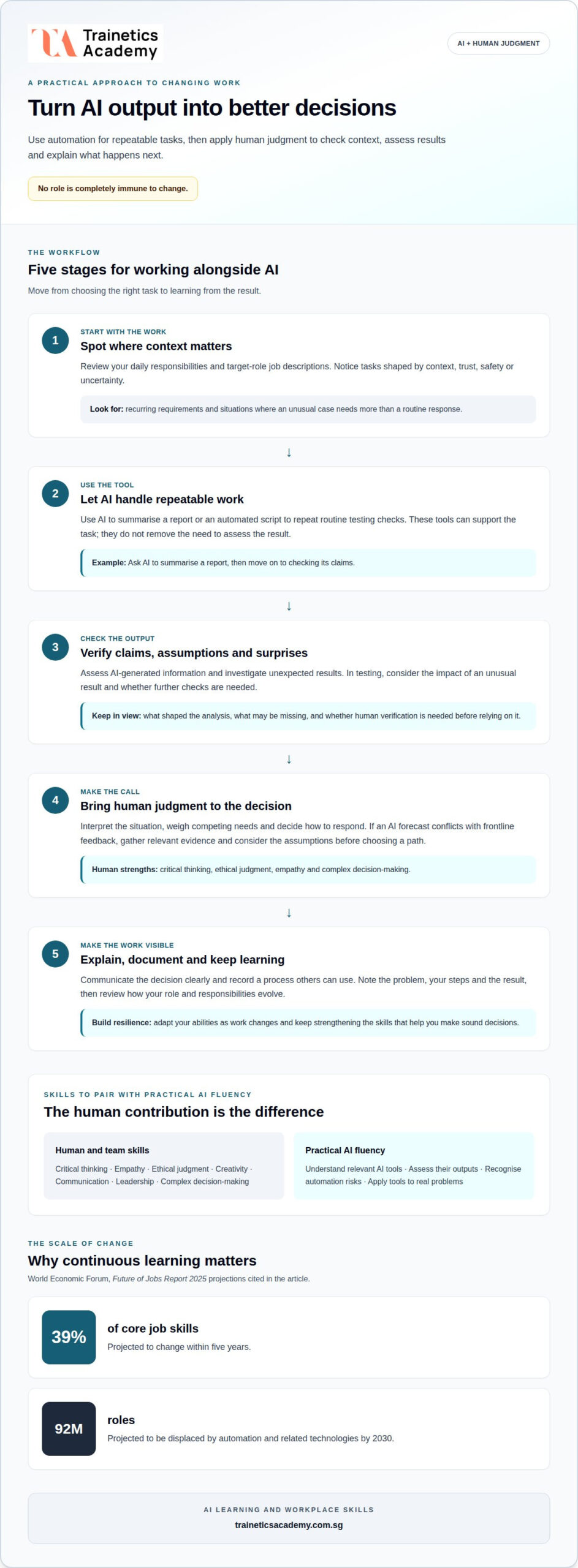
It’s reasonable to wonder whether technical skills still matter when AI can handle more routine tasks. They do, especially when paired with human judgment: employers need people who can understand AI tools, assess their outputs, and apply them to real problems. The World Economic Forum’s Future of Jobs Report 2025 projects that 39% of core job skills will change within five years, putting continuous learning at the heart of career resilience.
This article explains which human, leadership, communication, creative, and practical technical skills can help you stay valuable in Singapore’s changing workplace. You’ll also learn how to strengthen these capabilities, demonstrate them to employers, and build practical AI knowledge that supports your work without replacing your judgment.
Key Takeaways
- Strengthen judgment, empathy, and problem-solving so you can handle situations that require context and human understanding.
- Build leadership habits that help teams make decisions, adapt to change, and work effectively with AI.
- Make your communication skills visible by explaining decisions clearly and documenting processes others can use.
- Pair creative direction with strategic thinking to guide AI-generated work toward meaningful outcomes.
- Develop practical AI fluency, then apply it to relevant tasks and explain how it improves your work.
1. Human interaction, creativity, and strategic thinking
Automation-proof skills vary by occupation because tasks and their consequences differ. A healthcare worker may need empathy during a difficult conversation, while an IT analyst must interpret a threat before acting. In Singapore, review your daily responsibilities and identify where context, trust, safety, or uncertainty shape the outcome.
Skills less likely to be automated include empathy, critical thinking, ethical judgment, creativity, and complex decision-making. A script can classify information, but a person must interpret an unusual customer concern or weigh competing needs. In healthcare, AI can help doctors analyse data, while human care remains central.
Research points to change, not a simple divide between safe and disappearing jobs. The World Economic Forum’s Future of Jobs Report 2025 projects that 39% of core job skills will change within five years. It also projects 92 million roles displaced by automation and related technologies by 2030.
To stay employable alongside AI, practise problem-solving, communication, adaptability, and human judgment. For example, use AI to summarise a report, check its claims, then explain the decision you made. This combines technical ability with careful thinking rather than relying on automated output alone.
Useful technical skills include understanding AI tools in your industry, checking their outputs, and recognising automation risks. In software testing, an automated script can repeat routine checks; a tester still needs to investigate unexpected results, assess their impact, and decide whether further testing is needed.
In Singapore, identify resilient skills by reviewing job descriptions for your target occupation. Note recurring requirements, then choose a task where you can practise a skill, such as explaining an analysis or verifying AI-generated information. Record the problem, your steps, and the result to demonstrate your ability in practice.
Assuming any job or skill is completely automation-proof creates risk. Tasks can change even when an occupation remains, and routine work may be automated. A better approach is to keep learning, review how your role evolves, and strengthen the skills that help you adapt and make sound decisions.
Automation can handle repeatable testing checks quickly and consistently. Human-led testing adds context: a person can explore an unexpected result, consider how real users might respond, and judge whether the test missed something. Combine automated checks with human verification before relying on a result.
Emotional intelligence also supports collaboration when AI changes a workflow. A manager introducing an AI-assisted process, for instance, needs to explain its purpose, listen to staff concerns, and respond to problems. These actions depend on trust and judgment, not simply producing a faster answer.
2. Leadership and people management
A team leader handles work that changes shape as priorities shift. For example, a Singapore project manager may need to reassign tasks when a client changes requirements. That calls for listening, setting priorities, and explaining trade-offs. A published AI-resilience ranking gives leaders, managers, and founders a score of 90 out of 100.
High task variability makes people management especially demanding. A fixed workflow can be documented and repeated, but an unexpected delay calls for fresh decisions. A supervisor facing a late delivery might weigh customer impact, staff capacity, and dependencies before changing the plan. The value lies in adapting responsibly, not simply following a script.
Leaders also need to make decisions with incomplete information. Consider an AI-generated forecast that conflicts with frontline feedback. A capable manager asks what assumptions shaped the analysis, gathers relevant evidence, and explains the chosen response. This gives the team direction while keeping human accountability clear.
People management means more than assigning work. During an AI rollout, a team lead can identify which tasks are changing, explain how responsibilities may shift, and invite staff to flag workflow problems. These steps can reveal practical concerns, such as duplicate data entry or unclear review ownership, before they disrupt delivery.
AI product management brings leadership and technical understanding together. A product manager defines the user problem, prioritises features, and coordinates design, engineering, and business teams. Coding can help clarify what a system does, but the manager must also assess whether its output serves the intended user and fits the product’s purpose.
For example, a team developing an AI support assistant could map common customer needs, test answers against real scenarios, and decide when human escalation matters. The product manager explains success criteria to developers and stakeholders. This takes analysis, clear communication, and judgment about where automation supports service rather than weakening it.
To build these capabilities, practise leading a defined project. Set a goal, clarify responsibilities, and record decisions as the work develops. When priorities change, explain what changed and why. After delivery, review one decision that helped and one that could be handled better next time.
People leadership does not replace technical fluency. A manager who understands how an AI tool uses inputs can ask sharper questions about its limits and workflow impact. Pair that knowledge with listening, delegation, and sound decision-making. This equips leaders to guide teams through changing work, not just oversee stable processes.
3. Transferable communication and documentation skills
A technical finding only helps when someone can act on it. Imagine an analyst spotting a payment error but reporting only, “The system failed.” A useful update names the affected process, describes the evidence, and recommends a next step. This communication skill transfers across roles because teams need clear information to make decisions.
Documentation makes that clarity useful after a conversation ends. In a handover, record the problem, relevant context, actions taken, and unresolved questions. For example, an IT support note should explain which setting changed and what happened afterward. The next colleague can continue the investigation without repeating the same checks.
Technical professionals benefit from pairing subject knowledge with documentation, collaboration, incident communication, and the ability to explain trade-offs. If an automated alert interrupts a service, an incident update should describe user impact, the current response, and the next update point. This helps colleagues understand the situation without confusing a working hypothesis with a confirmed finding.
Communication also supports product judgment. Suppose an AI feature produces a technically correct answer that users misunderstand. A product team must explain the issue, consider user context, and decide whether to change the wording, workflow, or feature itself. Clear feedback helps distinguish a coding defect from a design problem or unmet user need.
Storytelling can make complex work understandable without overselling it. Structure a project explanation around the problem, your action, and the result. For instance, describe a repetitive reporting task, explain how you assessed an AI-assisted approach, then state what changed in the workflow. Include limitations, such as where human review remained necessary.
This structure helps employers assess applied judgment rather than a list of software names. A candidate who says “I know automation” gives little context. Someone who explains how they identified a bottleneck, tested a workflow, documented an error, and improved the handover shows how their skills solved a real problem.
Build evidence through a small project. Document the purpose, tools, process, decisions, and lessons learned. The recommended IT skills plan allocates days 61-75 to documenting a project with screenshots, architecture notes, and lessons learned. A clear record lets another person follow your reasoning and assess your contribution.
Tailor each explanation to your audience. A manager may need the business impact, while a developer needs the error conditions and steps to reproduce it. Before sending an update, identify the reader, the decision they need to make, and the evidence that supports it. This discipline makes communication and documentation valuable across changing roles.
4. Creative direction and strategic judgment
AI can generate options, but creative direction determines which one serves the brief. Consider a Singapore retailer planning a seasonal campaign. A tool might suggest headlines and images, while a creative lead checks audience fit, brand voice, and cultural context. The valuable skill is setting criteria, refining ideas, and explaining why one direction deserves investment.
That judgment starts with a clear problem. Before generating content, define the audience, purpose, and action the project should support. For a public transport campaign, the goal might be to help commuters understand a service change. The team can then assess whether AI-generated copy is accurate, accessible, and useful, rather than choosing the most polished-sounding draft.
Creative directors, authors, and high-level content strategists receive an AI-resilience score of 85 out of 100 in the research findings. The score does not mean these roles are immune to change. It points to work involving original thinking, interpretation, and direction. AI can support analysis, while people make final calls about what should be created and why.
Use a practical review process for AI-assisted projects. First, compare each draft with the brief. Next, check the facts and tone. Then identify what feels generic or misses the intended audience. Finally, revise the strongest elements and document the reasons for important choices. This helps teams use AI without letting its first output set the creative standard.
Strategic judgment also means balancing demand with long-term value. For example, a communications team may face pressure to publish quickly. A creative lead can weigh speed against accuracy, consistency, and audience trust. If an automated system proposes a high-volume content plan, assess whether each item serves the project’s purpose or simply adds output.
To practise, build a small portfolio project around a real communication challenge. State the audience and objective, show several possible approaches, and explain your selection criteria. Include an AI-assisted draft and your revisions. A reviewer can see how you direct tools, recognise weak suggestions, and make deliberate decisions instead of presenting generated material as finished work.
Creative work will continue to change as tools improve. Make skill development part of your project routine: note which decisions required human input, where AI-generated material fell short, and what you would refine next time. This record helps you identify strengths to deepen and techniques to practise as expectations evolve.
5. Practical technical skills employers value
For anyone asking what skills are automation-proof in 2026, practical AI fluency is a strong place to start. Technical skills remain valuable when they improve real work. Learn how AI tools operate in your target industry, then identify where their output enters a workflow. A Singapore operations analyst, for example, might assess how an AI summary informs a reporting decision.
Build practical AI literacy before pursuing advanced engineering. Learn to describe a task clearly, provide relevant context, compare generated responses, and spot unsupported claims. For example, ask an AI tool to organise meeting notes, then check names, actions, and deadlines against the original record.
Verification is a technical skill, not a final formality. When an AI tool produces a customer trend summary, trace its claims to the source data and look for missing context. Record corrections and explain what evidence supports your conclusion. This habit helps teams use software without assuming its output is reliable.
Learn the tools connected to your daily responsibilities. A support specialist could practise categorising repetitive tickets, while an analyst might explore data visualisation or query tools. Similarly, investment professionals refining their forecasting expertise can explore advanced coursework at financialmodellinguniversity.com to ensure their quantitative models reflect sound business assumptions. Choose a workflow, note its current friction point, test an AI-assisted improvement, and assess the outcome through observable changes in the work.
Link upskilling to a work result. For instance, identify a repetitive task, map its current steps, and test whether automation can reduce manual handling. An AI supply-chain algorithm reduced costs for a retail company by 15%. The useful lesson is to connect technical learning with a defined operational outcome.
Technical fluency also means understanding where human interaction remains essential. In a software team, automation might flag a failed test, but an engineer still investigates the cause and assesses release risk. Learn to interpret logs, reproduce the issue, document the finding, and explain its impact to colleagues.
To demonstrate your ability, create a small work-related project. State the problem, tools used, workflow, result, and possible improvements. For example, show how you tested an AI-assisted process and handled an incorrect response. Employers can assess your reasoning and practical application, not just a list of software on your résumé.
Pair technical knowledge with sound judgment as you prepare for changing work. Select a target role, review relevant job descriptions, and note recurring technical requirements. Practise a skill through a project, then explain what changed and how you assessed the result. For practical AI knowledge you can apply at work, consider structured AI learning.
Trainetics Academy: Artificial Intelligence Course
Trainetics Academy offers an Artificial Intelligence Course for people who want to build practical AI understanding as work changes. Consider it when you’re ready to move beyond general awareness and develop a clearer foundation for using AI in your professional life.
Learning about AI can help you assess where these tools fit your work, understand their outputs, and make informed decisions about their use. Pair that knowledge with the communication, judgment, and problem-solving skills discussed above to strengthen your approach to changing tasks.
Visit traineticsacademy.com.sg to explore the Artificial Intelligence Course or contact Trainetics Academy.
Make your next career move a deliberate one
Knowing what skills are automation-proof in 2026 is a starting point, not a fixed career plan. The next step is to choose one capability that fits your work and put it into practice. You might explore an AI tool relevant to your role, strengthen how you evaluate its output, or build a small project that demonstrates your learning.
Keep your development connected to real responsibilities. Note where your work is changing, identify a skill that could help, and set a practical learning goal. Trainetics Academy’s Artificial Intelligence Course can support learners who want to build their understanding of AI as they prepare for evolving work.
Contact Trainetics Academy today to discuss your next learning step. With focused practice and a commitment to continuous improvement, you can move forward with confidence.
Frequently Asked Questions
What About Traditional Tech Skills?
Traditional tech skills remain useful when they help you diagnose systems, not just operate familiar software. In a Singapore office, for example, understanding file permissions can help resolve why a colleague can’t access a shared document. Learn the tools used in your role, but also practise tracing problems across connected systems. This broader view helps you adapt when an employer changes platforms or introduces new software.
Is AI engineering or AI-assisted coding a future-proof career?
Neither path is guaranteed to stay unchanged, but both can build valuable expertise when paired with sound engineering practice. AI engineering may involve preparing data, integrating models, and monitoring how systems behave after launch. AI-assisted coding can help developers work with unfamiliar codebases, but they still need to understand software architecture and maintainable design. Explore both through a project, then assess which problems you most want to solve.
What IT Skills Are Most Important in 2026?
The most useful IT skills depend on the responsibilities you want to take on. A systems administrator may prioritise access management and network troubleshooting, while a data analyst may need reliable data preparation and query skills. Read job descriptions for your target role and group recurring requirements by task. Then select a practical exercise that demonstrates capability, such as documenting a system configuration or building a clear data report.
What are the jobs of the future?
Rather than betting on a single job title, watch for roles that combine emerging tools with persistent organisational needs. For example, businesses need people who can coordinate technology projects, maintain complex systems, and translate specialist information for decision-makers. In Singapore, compare job descriptions across sectors and note recurring responsibilities. This gives you a practical basis for choosing skills to develop as roles evolve.
What skills should I develop in my child for the future?
Give children opportunities to practise curiosity, patience, and learning from mistakes. A simple activity is asking them to plan a family outing, compare options, and explain their choice. For a creative challenge, have them write instructions for a game that someone else can follow. These experiences build independence and clear expression without advanced technology, while helping children get comfortable revising an idea when it doesn’t work.
Which jobs are safe from AI automation?
No job title guarantees protection from automation; the mix of tasks matters more. Compare a role’s routine administration with its responsibilities for unusual cases, physical work, or accountable decisions. For example, a technician may use automated diagnostics but still need to handle equipment and respond to site conditions. Vocational training centers such as Trilogix Institute focus on these applied fields, emphasizing practical skills in electrical engineering and industrial automation where physical intervention and adaptive problem-solving remain essential. When evaluating a career, consider how much the work depends on adapting to situations that cannot be fully described in advance.
Which uniquely human skills complement AI and automation?
Negotiation, conflict resolution, and cultural awareness can add value when people have different priorities. In a project meeting, a facilitator may need to surface an unspoken concern, clarify competing expectations, and help the group reach a workable decision. These skills matter in customer service, operations, and cross-functional teams. Practise them by fairly summarising another person’s position before proposing a response or compromise.
How important are critical thinking, creativity, and problem-solving for automation resilience?
These skills help you distinguish a convincing answer from one that actually addresses the problem. Practise by writing down your assumptions before choosing a solution, then asking what evidence would change your mind. For a workplace issue, compare possible causes and identify how you could test each one. This improves decision quality and makes your reasoning easier for colleagues to review, challenge, and build on.
Disclaimer
AI Content Disclaimer: Some articles on this website may be generated or assisted by AI-powered content creation tools. While we strive for accuracy and relevance, readers should independently verify information before relying on it. The content is provided for informational purposes only and does not constitute professional advice.